


Laser Cladding Repair Processing of Drive Shaft
Contact Info
- Add:西安市国家民用航天产业基地航天基地299号西安建工科技创业基地十号楼4层, Zip:
- Contact: 段纯
- Tel:17392761868
- Email:gsjgkj@163.com
Other Products


The drive shaft, as a critical component in mechanical equipment, undertakes the important task of transmitting power and motion. However, during actual use, drive shafts are often affected by adverse factors such as wear and corrosion, leading to performance degradation and even impacting the normal operation of the entire equipment. Laser cladding repair technology, fortunately, provides an efficient and reliable method for the restoration of drive shafts.
Laser cladding repair technology is a process based on the high-energy density characteristics of a laser beam, where specific cladding materials are melted and rapidly solidified on the surface of the drive shaft, forming a dense cladding layer metallurgically bonded to the substrate. This technology not only restores the surface integrity of the drive shaft but also enhances its hardness, wear resistance, and corrosion resistance, thereby extending its service life.
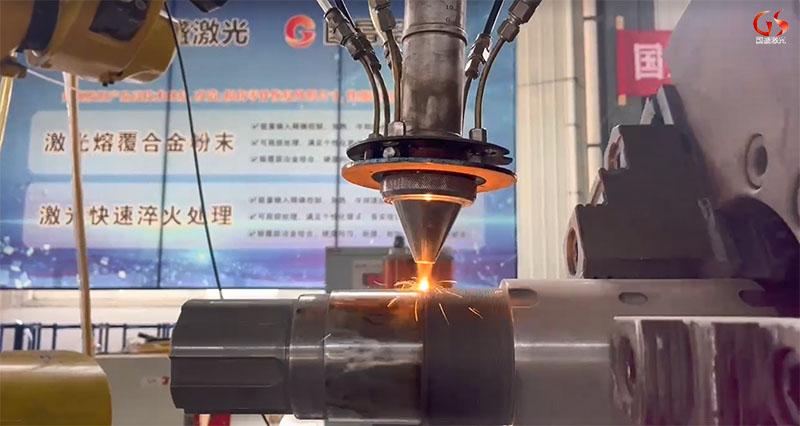
In the laser cladding repair process for drive shafts, selecting appropriate cladding materials and formulations is crucial. The cladding materials should possess good wear resistance, corrosion resistance, and compatibility with the substrate material. At the same time, the formulation design should also consider the performance requirements of the cladding layer, such as hardness and toughness. Through reasonable material selection and formulation design, the quality of the cladding layer can be ensured to meet the desired state.
The advantages of laser cladding repair technology lie in its efficiency, high precision, and high quality. Due to the high energy density and rapid heating speed of the laser beam, large-area repair work can be completed in a short time. Additionally, the heat-affected zone during the laser cladding process is small, resulting in minimal thermal damage to the substrate material, thereby ensuring stable and reliable performance of the repaired drive shaft.
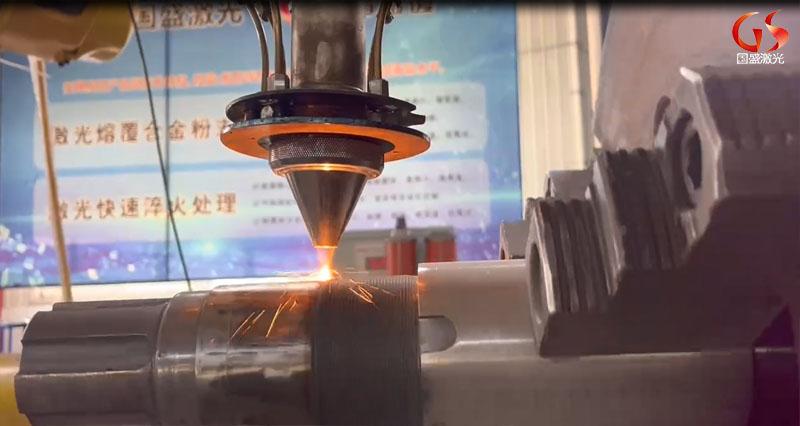
However, in practical applications, laser cladding repair technology for drive shafts also faces some challenges. First, the thickness and quality of the cladding layer need to be precisely controlled. A cladding layer that is too thin may not effectively repair defects, while one that is too thick may lead to issues such as molten pool instability and deformation. Therefore, fine-tuning parameters such as laser power and scanning speed is necessary to ensure the thickness and quality of the cladding layer meet requirements.
Furthermore, the equipment and operational requirements for laser cladding repair technology are relatively high. High-precision laser equipment, professional operators, and a suitable working environment are all key factors in ensuring repair quality. Thus, in practical applications, regular maintenance and upkeep of the equipment are essential, along with strengthening the training and management of operators to ensure the stable application of the technology.
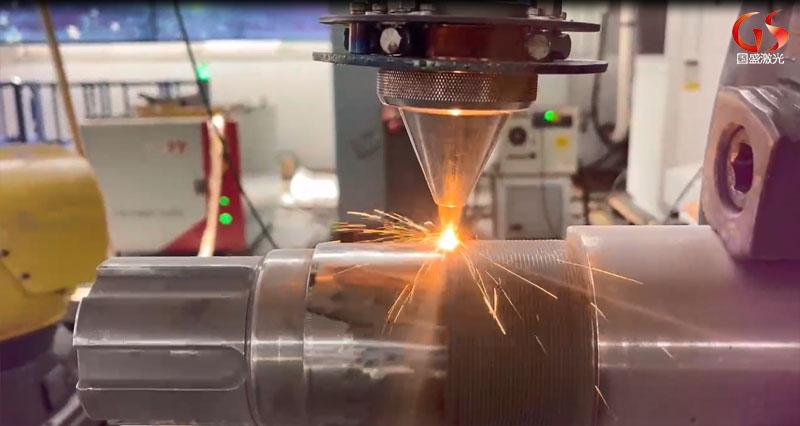
To further improve the effectiveness and quality of laser cladding repair technology for drive shafts, some optimization measures can be adopted. For example, pre-treatment of the drive shaft surface before cladding, including steps such as degreasing, rust removal, and sandblasting, can be performed to remove surface contaminants and oxide layers, thereby enhancing the bonding strength of the cladding layer. Additionally, advanced inspection methods, such as magnetic particle testing and X-ray testing, can be used to conduct quality inspections of the cladding layer, ensuring its quality meets requirements.
In summary, laser cladding repair technology for drive shafts is an efficient, reliable, and widely applicable surface restoration technology. By selecting appropriate cladding materials and formulations, precisely controlling the thickness and quality of the cladding layer, and strengthening equipment and operational management, the repair effectiveness and quality can be further improved, providing strong support for the long-term use of drive shafts. With the continuous advancement of technology and the expansion of application areas, it is believed that laser cladding repair technology for drive shafts will play an even more important role in the future.
| Industry Category | Others |
|---|---|
| Product Category | |
| Brand: | 国盛激光 |
| Spec: | |
| Manufacturer: | 西安国盛激光 |
| Origin: | 116101 |


